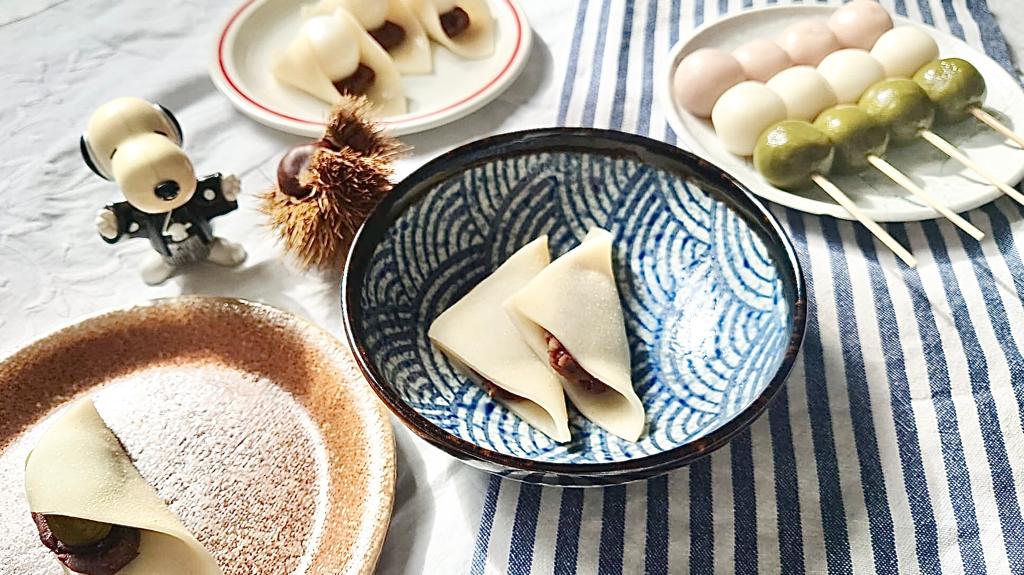
If you’ve ever had the opportunity to visit Japan, you’ll notice that wagashi aren’t just special-occasion treats. More often than not, wagashi will make an appearance in daily life as a casual after-dinner dessert. Far from being a sacred pinnacle of confectionary, wagashi are interwoven into many aspects of Japanese daily life. Obviously some wagashi have been elevated to an artform and are for special occasions but for the most part, wagashi are there to be enjoyed and eaten informally.
So what is traditional Japanese wagashi?
In a nutshell, wagashi is a broad term used to describe “traditional Japanese confectionery”. The counter-term would be yogashi, which broadly means “Western confectionery”. So cakes are yogashi while mochi are wagashi. This simple distinction can get blurred when some yogashi have become so synonymous with Japan that they’re often thought of as wagashi when they’re not. More on that later.
Rather than try and remember whether a given confectionery is wagashi, or yogashi – it’s better to appreciate and enjoy the wagashi!
General characteristics of wagashi
- Not as sweet as western confectionery.
- Generally are made from glutinous rice flour, or rice flour.
- Azuki bean paste plays an important role.
- Traditional Japanese flavours
- Appearance is often highly symbolic, and flavours often seasonal.
Not as sweet as western confectionery: Japanese sweets are not sweet in the way Western desserts are sweet. There’s no aggressive taste of butter, sugar, cream, or chocolate. Wagashi, by contrast, is a far gentler experience. That doesn’t mean wagashi is sugar-free! Far from it, but since the wagashi doesn’t contain industrial sweeteners like glucose-fructose syrup, the effect is far milder than you’d expect. Most traditional wagashi developed around sugar made from either molasses or sugarcane so if you’re lucky to sample high-quality wagashi, you may notice a slight caramel-like taste.
Generally made of glutinous rice flour, or rice flour: Wheat is a relatively new addition to Japan, only really becoming popular after World War Two. So it’s no surprise that the majority of wagashi are made of rice flour – glutinous rice flour to be precise. While some wagashi, like dorayaki and manju, are made from wheat flour, wagashi often predates the introduction of wheat flour.
Azuki bean paste plays an important role: The base of most wagashi is anko, sweet red bean paste. Made by boiling beans with sugar, anko provides a smooth texture and sweet taste to wagashi, allowing for a nice pairing with unsweetened matcha and/or standard sencha (green tea).
Traditional Japanese flavours: Wagashi is a celebration of Japanese culture and though you’ll see a lot of Western flavour influences, it mainly features quintessentially Japanese flavours. Matcha features prominently, but also hojicha and genmaicha. Cinnamon features heavily in the yatsuhashi scene and black sesame is a hidden gem when enjoying daifuku. Yuzu citrus is a delicious regional specialty on the island of Shikoku, featuring in many different kinds of wagashi.
Appearance is often highly symbolic, and flavours often seasonal: Some wagashi are simple and very proletarian. Mochi dangi evolved out of the wayside tavern and so to this day are still balls on a bamboo skewer. Other wagashi, developed for the aristocracy, are incredibly ornate and beautifully sculpted. Food dyes are used to cleverly and tastefully recreate symbols relating to aspects of Japanese culture, and seasonal flavours are incorporated. The result is a yearlong confectionery celebration. It’s amazing to think that most wagashi are still made from the same few ingredients. The ability of the wagashi craftsperson therefore really takes centre stage!
Comments are closed