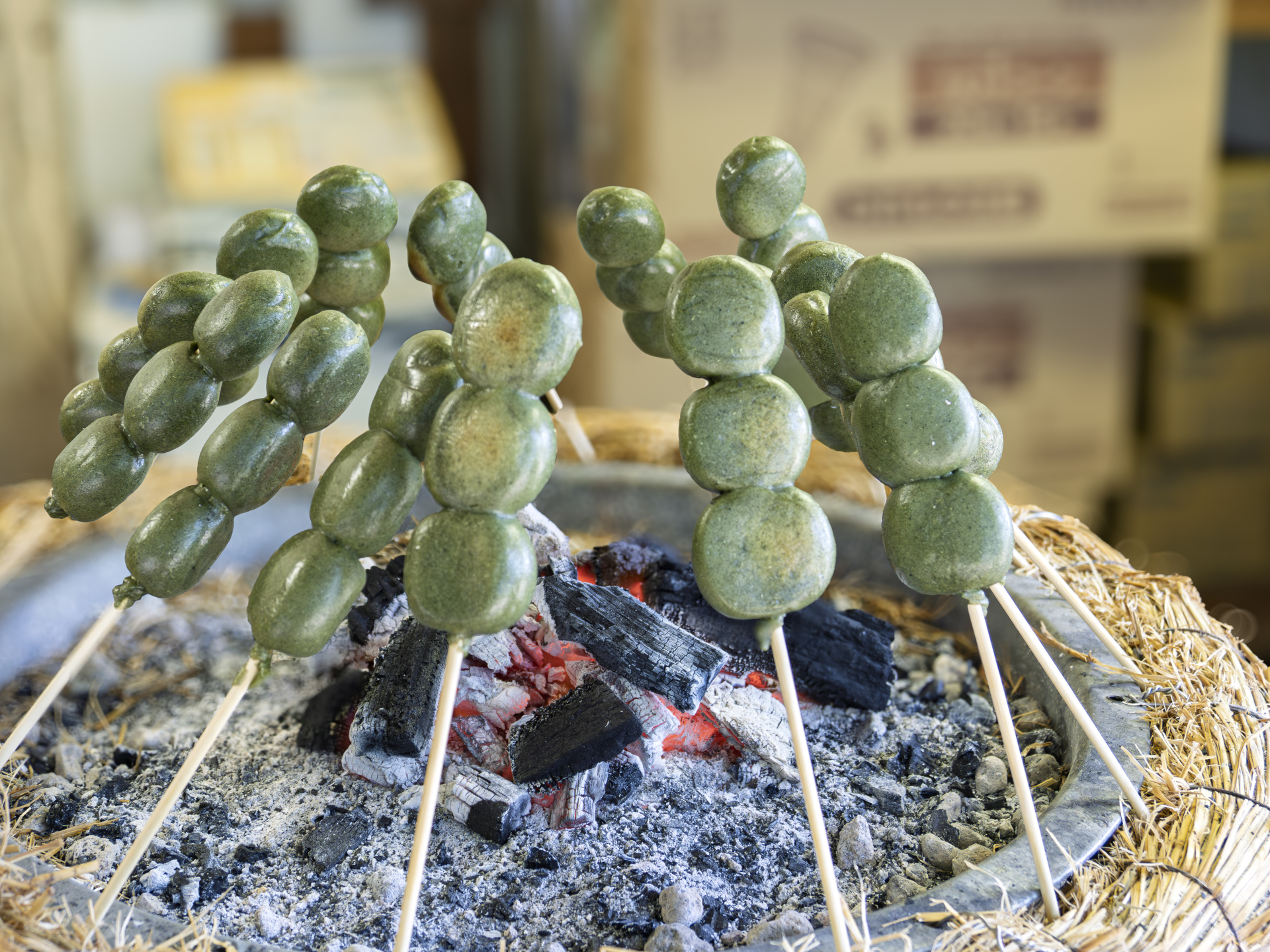
Matcha is everywhere.
Walk down the high street or through the aisles of your local shops and you’ll probably find a pack or tin of Japanese matcha powder. Available at a variety of price points, matcha is here to stay and has become a permanent addition to the British lexicon.
As wonderful and tasty as matcha is, Japanese traditional wagashi is so much more than matcha. Let’s take a look at some other flavours that make wagashi such a fun joy.
Kinako きな粉
You’d never expect the humble soybean to play such an important part of the wagashi experience but it does, and once you start using kinako, it feels wrong to enjoy wagashi without any. Kinako is roasted soybean powder and you often see it sprinkled on top of warabi mochi, or mochi balls. It has a nutty flavour that you’ll find is common in roasted powders but this is the base of all the others. The original source of the nutty flavour so commonly enjoyed in wagashi!

Hojicha ほうじ茶
Hojicha is a tea that comes from the same camellia sinensis tea plant as matcha. Of course there are more details but for this article, let’s make it simple and call hojicha the roasted cousin of matcha. The roasting of tea leaves gives hojicha its unique roasted, nutty flavour as well as a reddish-brown hue. Wagashi made with hojicha will have a deliciously nutty flavour that’s quite different from the slightly bitter flavours of matcha.

Genmaicha 玄米茶
Genmaicha is the happy collaboration of green tea and roasted brown rice. Unlike hojicha where the tea leaves are roasted, the tea component of genmaicha remains green. It’s the brown rice that is roasted, puffing up and providing a wonderful nutty flavour to the slightly bitter green tea. It’s a really good fusion of flavours! Wagashi made with genmaicha will have a similarly roasted note as hojicha wagashi, but with familiar notes of green tea.

Cinnamon 肉桂
While western audiences will be familiar with cinnamon, it’s surprising how many visitors to Kyoto are surprised to discover cinnamon as a wagashi flavour. Cinnamon is traditionally known as “nikki” in Japanese, though many call it “cinnamon” these days. Cinnamon brings a spicy hint to an otherwise warm favour profile, but the tricky part is that not all wagashi work with cinnamon: it works fantastically in yatsuhashi but when it comes to mochi balls and warabi mochi, you’re better off sprinkling the cinnamon on top. Funny how it works out.
Kuromitsu 黒蜜
Kuromitsu is a wonderful flavour that doesn’t often make it out of Japan. Simply put, kuromitsu is dark brown sugar made from molasses. It’s the addition of molasses that gives kuromitsu that distinct caramel-y flavour. It’s a simple flavour but one that works both in the wagashi as an ingredient, and on top of the wagashi as a topping, or syrup. If you’re really lucky enough to visit Okinawa, you’ll be able to experience the local “Kokuto” black sugar which is an even more intense version of kuromitsu.
Comments are closed