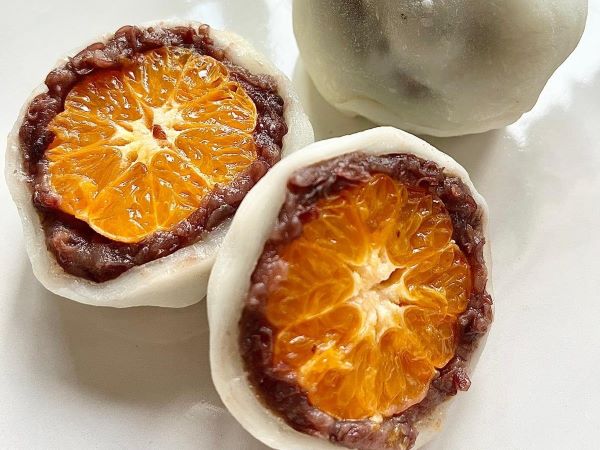
We use the term “wagashi” to describe our snacks here at Matcha Sundays. Traditional Japanese confectionery, influenced by nature and the seasons.

With familiar shapes, colours and motifs that are instantly recognisable, most wagashi are obviously identifiable as such. So if wagashi are on one side, then yōgashi are on the other side. Traditional Japanese wagashi as opposed to Western yōgashi.

If it’s a triangular yatsuhashi that’s made in the Kyoto traditions dating back centuries, then it’s clearly a wagashi.

If it’s a strawberry short cake created in the 1990s, then it’s clearly a yōgashi.
It’s all about the ingredients
Since it’s a bit difficult to have a system of identification based on visual identification, a somewhat more clear-cut and reliable system of identification is based on ingredients. If it uses traditional ingredients such as below, then you’re pretty safe in assuming it’s a wagashi confection.
– Azuki bean
– Glutinous rice flour
– Agar
If the confection uses ingredients commonly recognizable in Western culture, then it’s easy to see it’s a yōgashi confection.
– Wheat
– Butter
– Gelatin
Remember though, just using traditional ingredients isn’t enough. You have to also not use Western ingredients such as wheat and dairy to classify it as a wagashi. Why? It’s down to experimentation by Japanese wagashi makers. With so much inspiration available from different cultures around the world and unlimited access to ingredients, many wagashi makers are experimenting all the time.
The rise of “neo wagashi”

These new creations are often called “Neo wagashi” and blur the boundaries between traditional wagashi and modern yōgashi. For example, imagine a Swiss roll cake with matcha and azuki bean, plus seasonal autumn chestnuts. The roll cake is clearly a Western confection but the matcha and azuki bean are clearly a nod to wagashi precepts. The fruit daifuku often featured in our Matcha Sundays weekly boxes are a good example of neo wagashi. Daifuku traditionally have azuki bean filling so you can imagine the excitement that ran through Japanese society when fruit daifuku first appeared in the 1980s.
So with “neo wagashi” standing between the traditional wagashi and Western yogashi, we’re in an exciting new world where creative wagashi makers are fusing new and old, modern and traditional. As Matcha Sundays, we’re happy to be in the middle of all this, making and honouring the traditional wagashi while experimenting with yogashi influences. Couldn’t ask for a better place to be!
Comments are closed